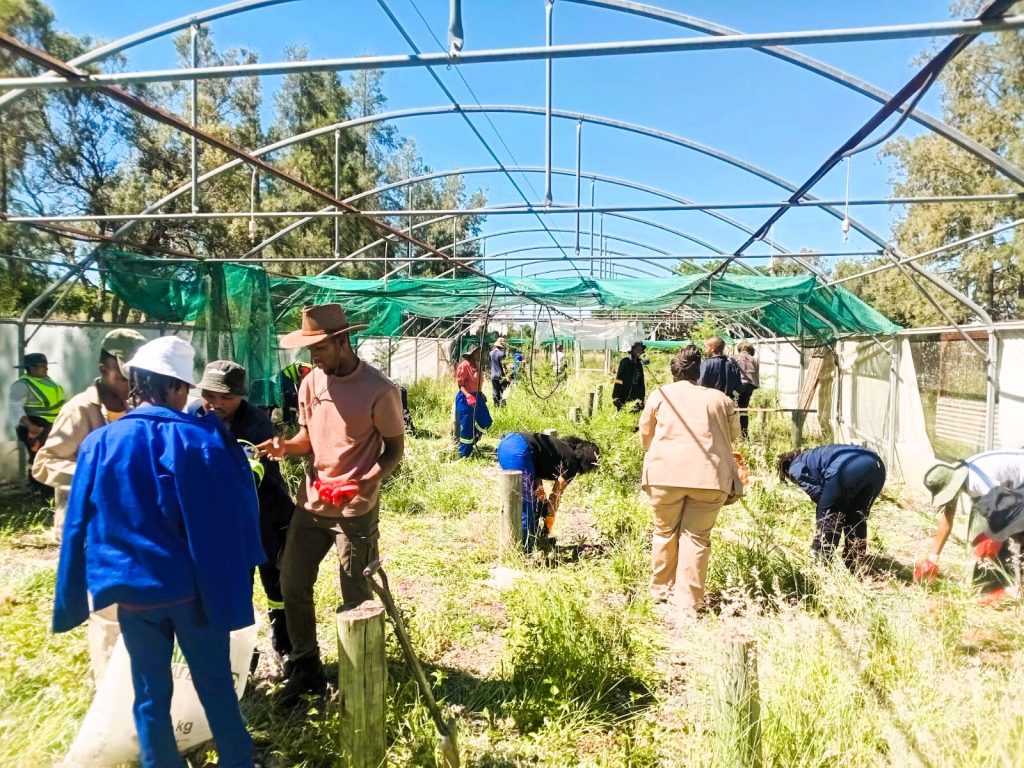


As part of the Institution’s commitment to expose forestry students to the whole forestry value chain.
Term practical’s for first year students were organized with the intention to expose them to nursery practices, tree identification of indigenous & commercial tree species, silvicultural operations under commercial environment as well as indigenous forest management.
Fort Cox Forestry Technician Ayabonga Stemele explained that the commercial forestry value chain begins at understanding the site and propagating in a nursery the material that will match the site.
“The students had an opportunity to sow the seed in the nursery. In an ongoing project, they will raise the seedlings to meet quality requirements for planting in field and will have an opportunity to plant the same seedling in field, maintaining and protecting it against fires as well as pests and diseases,” says Stemele.
For maintenance, the practical session for both 1st and 2nd years included both chemical and manual weed control where students visited a commercial plantation in Stutterheim.
The purpose was for them to gain understanding of the importance of:
- Weed Control
- Timing of Weed Control
- Dominant Weed Species in Commercial Forestry Plantation
- Handling of Chemicals Safely as well as the types of chemicals used and their application.
Stemele added that the under-canopy burning was also done as part of fire protection, where students gained an understanding of fuel load management, the timing of control burn operation and knowledge of the firefighting equipment used in a control burn operation.
The 2nd year forestry students also visited the Sandile sawmill as part of processing.
The activities ranged from:
- Log Yard Management
- Wet and Drymill Activities
- Grading of Timber according to SABS standards,
- Timber recovery as well as by– products produced in a sawmill and timber treatment processes.